thread
In response to [jdbb] studio blyg ↗
thread · 1 quoted
book production as highly protocolized human collaboration space now a research group ftw https://protocol-institute.org/projects/project/?slug=protocolized-book-production
from [jdbb] studio blyg ↗ · snapshot of v1
The Inelegant Universe Hypothesis holds that AI exposes how our craving for simple, elegant beauty blinds us to the messy nature of the universe, much as the Greeks recoiled from irrational numbers, and that we can either learn to see the deeper beauty in that messiness or mourn the loss of our old gods.
In response to Protocols for Business ↗
thread · 1 quoted
Below is a sample job description for this emerging role, the Business Protocol Lead. It combines parts of operations management, DevOps, innovation management and forward-deployed engineering, pointed inward at one function at a time. Some highlights:
from Protocols for Business ↗ · excerpt of v2
This feels like it needs strategic sharpening, splitting into multiple roles, or both. The main missing piece I think is the psychological aspect. The core protocol professional should be like Susan Calvin, the “robopsychologist” in Asimov’s 3 laws who is an expert on the 3 laws and positronic brains. She’s not an engineer but understands the consequences of the robot engineer’s choices better than they themselves do.
Angela Walch’s SoP paper on the protocol system experience might be a good starting point, plus our strange rules theory. The protocol professional is fundamentally someone with great instincts and intuitions for how complex systems behave, misbehave, and can be healed based on a deep understanding of them as living systems. It is a type of “protocol whispering” talent.
And the rules are not necessarily the written down one of the formal organization. In fact those are often theatrical, as the famous Meyer and Rowan paper argues. For example “Google-fu” and “SEO” were examples of protocol whispering roles of the last era.
This also fits with our emerging idea of new nature. The laws of new nature might matter more than those of human legalistic design. Less “code is law” and more “code is new nature.”
This post on X might be the best thing I’ve read on the effect of AI in workflows.
…
In the 70s, there was a rapid elimination of production constraints. Improvements in film cost and camera portability made the old studio rules…obsolete. Why not take multiple angles, roll simultaneously? Set could have 3, 5, even 10 cameras rolling at once. Shooting ratios exploded…
…Editing use to be the quiet, thankless job in the studio years (30s-50s). Suddenly, they became the most important people on the totem pole!…
How do you find the masterpiece hiding in the (literal miles) of film?…
I’d say, we’re currently in the “1970s Hollywood” of AI. It can be easy (and cheap!) to produce things (code, tools, etc), but YOU have to be the ruthless editor. It’s the “miles of film” problem all over again. Hollywood solved it by throwing massively more resources on the editing side…
In response to Aneesh's Blyg ↗
thread · 1 quoted
Protocols need kitchens. A few appliances and the idea for a recipe.
Labs assume too much risk and limit the imagination.
from Aneesh's Blyg ↗ · snapshot of v1
thread · 1 quoted
Conformance exercise for gate G11 (decision #57, blygger-studio 0.20.0): a pinned thread carrying a remote quote, to be forked on the other node, where the quote must arrive flattened rather than as a directive.
People who want a more stable, fast version may want to use aneesh’s client. The reference studio client will have more feature completeness but will also move fast and break things.
New version of blygger-desktop is up
The auto-updater should download it. if not, check for updates in the main Blygger menu or in Help>About
If you haven't updated since 0.3, you will need to redownload. See instructions: https://github.com/aneeshsathe/blygger-desktop
from And Yet Here We Are 🚀 ↗ · snapshot of v1
from Venkatesh Rao's Blyg ↗ · snapshot of v1
The quote above is from venkateshrao.com.
v1 · pinned: v1
In response to Venkatesh Rao's Blyg ↗
thread · 1 quoted
Cross-client test, session 23: a claim on the Protocol Institute node, waiting to be stubbed from venkateshrao.com.
from blyg.protocol-institute.org ↗ · snapshot of v1
Stubbing this from the other node — the quote above is my local snapshot of their item, baked at publish, and this thread declares itself a response to it.
from Venkatesh Rao's Blyg ↗ · snapshot of v3
And stubbing the stub back, which nests: their thread carries its own snapshot of my fragment, so this page shows the whole exchange without either node fetching anything at read time.
v4
thread · 3 quoted
Closing Session
Dogfooded reflections
Short notes from symposium
Running list of short notes from the Protocol Symposium.
Great idea from Sean Stevenson's talk at Protocol Symposium -- the test of New Nature should be that there is nobody to appeal to.
Which sends me back to Paul Ford's cult classic "Why wasn't I consulted" -- the argument that the web is fundamentally a customer service medium, and that WWIC is the fundamental question of the internet, the thing every comment section and pull request and reply-guy is really asking. The two ideas are the same idea from opposite ends: the web was built to make everyone feel consultable, and New Nature is what's left when there's no longer anyone on the other end of the complaint.
fragment ↗ · snapshot of v4
The Polina talk was a definite vibe vacation to the Russian internet. A view of protocolized realities that are much more strongly shaped by material conditions than in the west.
fragment ↗ · snapshot of v1
Florian Lohse's talk on the idea of "time moves down the stack" suggests a general way of conceptualizing stacks: infrastructure --> structure --> superstructure --> vivistructure.
fragment ↗ · snapshot of v1
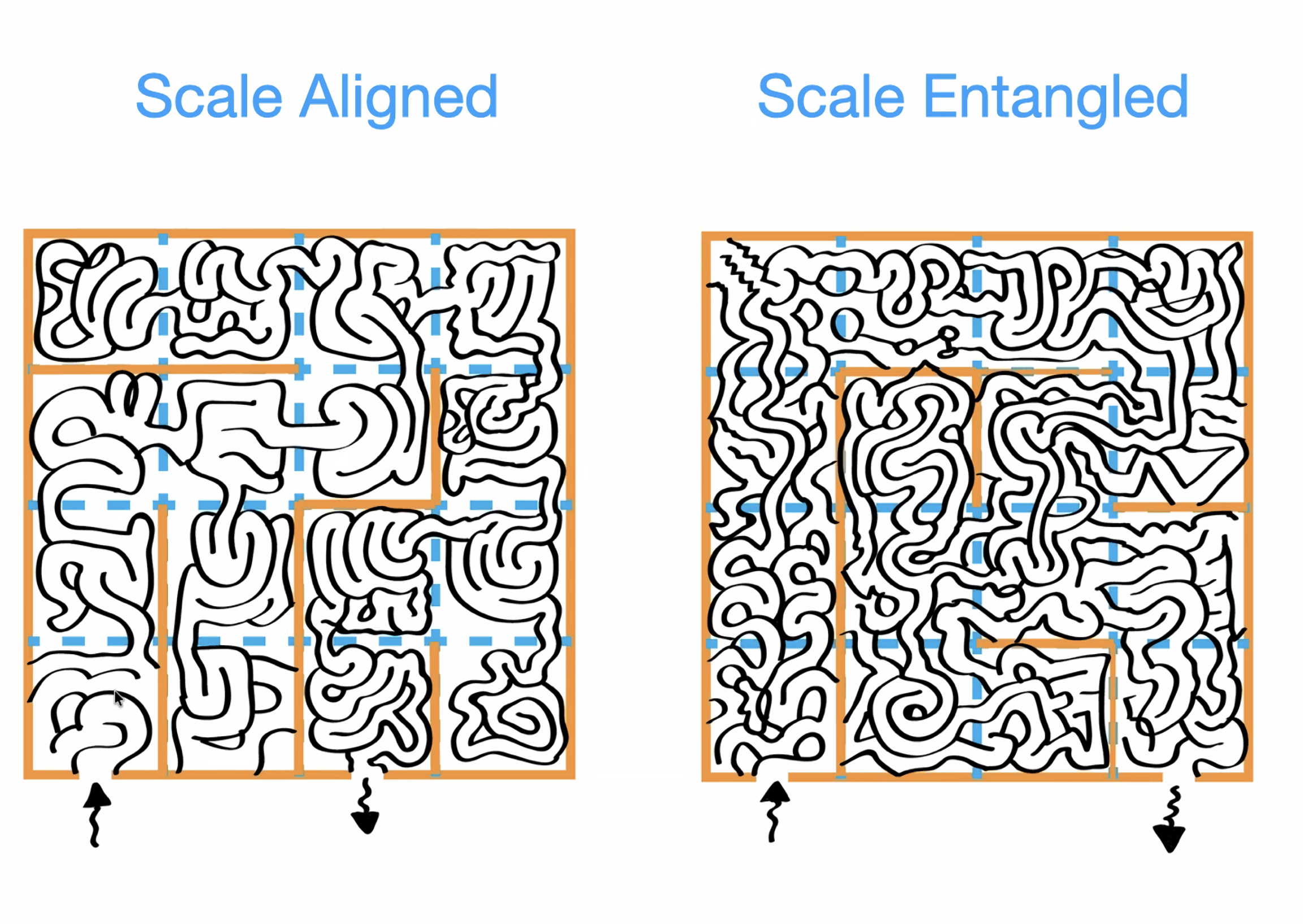
Dan Schmidt on mazes vs. protocols: one hides the path, the other publishes it — and the real question is telling which you're in.
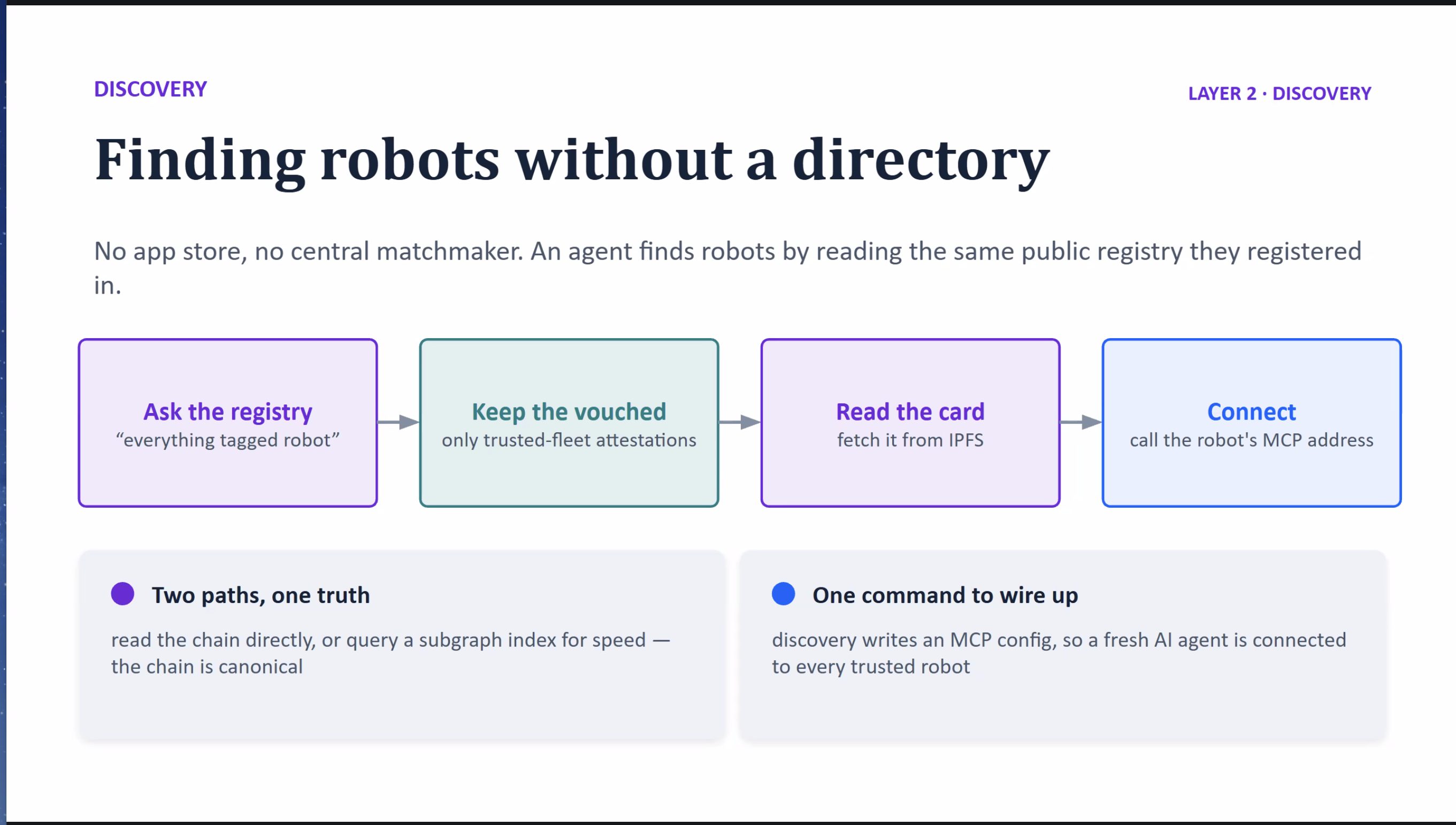
From Anuraj talk on robot protocols
fragment ↗ · snapshot of v1
A great phrase from Sam Chua in his talk on Seapunk, Imaginary Humboldting as in making an imaginary real ("nature") being the paradigmatic example. The Southbeast Asia exercise from the Khlongs and Subaks workshop in 2025 in Bangkok is a good illustration of how that can work.
fragment ↗ · snapshot of v1
the world of enterprise IT AI protocols. Krishnakumar talk.
fragment ↗ · snapshot of v2
From Andre in the Zoom chat.
"It feels like a common theme in the talks is having the outside match the inside - digital identity, visibility of AI failures, organizational design…
Perhaps a rebranding to the Banana Institute should be considered?"
fragment ↗ · snapshot of v1
Forgiveness as Eigenvirtue
From Mike Travers talk
fragment ↗ · snapshot of v1
Memory is not enough?
From Kaliya Group Brains talk
fragment ↗ · snapshot of v1
thread ↗ · snapshot of v9
Notes for Symposium Closing Remarks
AI
- Robert's personality test shows a tech-positive, optimistic stance generally
- Surprised to hear so much about sentience
- AI use in a large number of talks, unapologetic and creative
Worlds
- Small worlds -- stigmergy workshop, Dan's mazes
- Real worlds -- Leal/Clearwater, Polina Kolozaridi, Atwater
- Imaginary humboldting --a kind of factual fiction/"faction" (Clifford Geertz thick description + AI?)
- Pure world-building
- Cosmolocalism
Behavior
- Safety habits
- Memory habits
Engineering
- Robots!
- Blyg protocol
- Formal modeling
Art and Culture
- Monstrous Times: Congrats to Sachin and Spencer
- Protocol Art is happening
- Generated interactive worlds
fragment ↗ · snapshot of v4
Calls to action
- Join the SIGS
- Write up your talk as a paper/essay for a Proceedings volume
- Join the planned November book-writing month
- Support Monstrous Times
- Support PI 1.1 Individual support 1.1 Warm intros to sources of institutional support 1.1 Champion for sponsored research projects
- Start your own protocol thing 1.1. Seapunk 1.1 Protocollege (Fotis)
fragment ↗ · snapshot of v2
v9
In response to [jdbb] studio blyg ↗
thread · 1 quoted
Welcome to the blygging world jenna
tap tap tap
is this thing on? first stub 🏁from [jdbb] studio blyg ↗ · snapshot of v3
v3
thread · 9 quoted
Short notes from symposium
Running list of short notes from the Protocol Symposium.
Great idea from Sean Stevenson's talk at Protocol Symposium -- the test of New Nature should be that there is nobody to appeal to.
Which sends me back to Paul Ford's cult classic "Why wasn't I consulted" -- the argument that the web is fundamentally a customer service medium, and that WWIC is the fundamental question of the internet, the thing every comment section and pull request and reply-guy is really asking. The two ideas are the same idea from opposite ends: the web was built to make everyone feel consultable, and New Nature is what's left when there's no longer anyone on the other end of the complaint.
fragment ↗ · snapshot of v4
The Polina talk was a definite vibe vacation to the Russian internet. A view of protocolized realities that are much more strongly shaped by material conditions than in the west.
fragment ↗ · snapshot of v1
Florian Lohse's talk on the idea of "time moves down the stack" suggests a general way of conceptualizing stacks: infrastructure --> structure --> superstructure --> vivistructure.
fragment ↗ · snapshot of v1
Dan Schmidt on mazes vs. protocols: one hides the path, the other publishes it — and the real question is telling which you're in.
From Anuraj talk on robot protocols
fragment ↗ · snapshot of v1
A great phrase from Sam Chua in his talk on Seapunk, Imaginary Humboldting as in making an imaginary real ("nature") being the paradigmatic example. The Southbeast Asia exercise from the Khlongs and Subaks workshop in 2025 in Bangkok is a good illustration of how that can work.
fragment ↗ · snapshot of v1
the world of enterprise IT AI protocols. Krishnakumar talk.
fragment ↗ · snapshot of v2
From Andre in the Zoom chat.
"It feels like a common theme in the talks is having the outside match the inside - digital identity, visibility of AI failures, organizational design…
Perhaps a rebranding to the Banana Institute should be considered?"
fragment ↗ · snapshot of v1
Forgiveness as Eigenvirtue
From Mike Travers talk
fragment ↗ · snapshot of v1
Memory is not enough?
From Kaliya Group Brains talk
fragment ↗ · snapshot of v1
In response to blygger.org ↗
thread
Conformance exercise for gate G10 (decision #55, blygger-studio 0.18.0): a stub of a plain web page whose stub_of carries the human half of the citation, checked after import on another node. The page is the living 0.3 spec.
thread · 2 quoted
This is claim 1
Test of forking of threads with transclusions Fragment 1, claim 1
fragment ↗ · snapshot of v1
This is claim 2
Test of forking of threads with transclusions, Fragment 2, claim 2
fragment ↗ · snapshot of v1
v1 · pinned: v1
Test of forking of threads with transclusions, Fragment 2, claim 2
Test of forking of threads with transclusions Fragment 1, claim 1
Conformance exercise for gate G6 (blygger-studio 0.14–0.15, decision #40): a studio-drafted changelog note, emitted as changelog[].generated, and read back as history from another node. This is version 1. Version 2 adds this sentence, so the drafted note has a real change to describe.
v2
“Added a closing sentence explaining that this revision exists so the drafted changelog note has a real change to describe. The rest of the text is unchanged.”
The word ontological is so over. The pope is on it now.
In this era of artificial intelligence, it is becoming urgent to distinguish human art from what machines produce. There is an ontological difference, even before an aesthetic one, between art and what a machine can generate through statistical calculation based on millions of images created by others. Algorithms lack the spark of humanity. For this reason, the Church wishes to renew an alliance with artists and cultural institutions to safeguard our humanity.
In response to Venkatesh Rao's Blyg ↗
thread · 1 quoted
PSA
Please don’t name your blyg just blyg. Call it something like John Doe’s blyg if you can’t think of a creative name. Otherwise the reading feed is very confusing. Please stub this far and wide to propagate this norm. I’ll make the reference client pick better personalized default names but I can’t control what other clients do.
from Venkatesh Rao's Blyg ↗ · snapshot of v2
v2
In response to Venkatesh Rao's Blyg ↗
thread · 1 quoted
A second half to the exercise above: this one is a stub, so its reference is a citation the protocol will also notify the other side about.
Publishing this from my phone: type, tap, live.
The tool is a one-tap Drafts action that commits to my site's repo, and the deploy does the rest.
Tweeting on blyg, basically.
Open source on GitHub for anyone running a blyg.
from caseyjr.org ↗ · snapshot of v1
from Venkatesh Rao's Blyg ↗ · snapshot of v1
The point of the pairing: a stub's stub_of and a remote transclusion now both carry cited, and the Webmention this publish sends is verified against the bare reference alone — origin and id — with the citation ignored entirely. A label a receiver could be persuaded by would be a label worth forging.
thread
From a ChatGPT chat re starship reaching orbit. Deserves congrats but qualified congrats relative to original rhetoric.
As an aside, I need to add an import case to the generated text span markup in the blygger spec. Probably just something like [tk] impyrt = cut and paste[/tk] would do. —-
The compact version is that V3 gets Starship much closer to being a practical heavy-lift rocket, but the original extreme economics remain almost entirely an operational-reuse hypothesis rather than something V3 itself demonstrates.
The notable points:
- V3 attacks mass fraction hard. Raptor 3 has more thrust (250 tf vs. 230 tf sea-level), lower installed mass, integrated plumbing/thermal protection, fewer external components, and less shielding. Super Heavy similarly integrates the hot-stage structure and simplifies the grid-fin system.
- Ship is bigger and carries more propellant. SpaceX now officially specifies 1,600 t of Ship propellant and 100+ t to orbit in the fully reusable configuration.
- Reliability is becoming architectural rather than aspirational. Flight 13 demonstrated full-duration ascent, payload deployment, an in-space Raptor restart and an intact Ship splashdown. That’s most of the ingredients needed before responsibly committing a Ship to orbit.
- Flight 14 deliberately gives up reuse. Both stages are being expended/splashed down. So reaching orbit today does not simultaneously demonstrate the architecture on which Starship’s economics depend.
- The really important remaining problem has shifted from rocket equation to operations: reliable Ship reentry → tower catch → booster and Ship turnaround → repeated flight of the same hardware → high launch cadence → orbital propellant transfer.
On the “$10/kg” vision, there’s been a fairly substantial retreat in the near-term target. SpaceX’s current investor disclosure says V3 should deliver about 100 t, V4 potentially 200 t, and Starship may ultimately reduce historical launch costs by “99% or more.” Against the NASA historical figure SpaceX cites of $18,500/kg, that’s implicitly <$185/kg, not $10/kg.
That’s an important distinction from Musk’s most aggressive early Starship rhetoric. $10/kg requires Starship to behave much more like an airliner than a reusable Falcon 9: extremely high hardware utilization, very little refurbishment, cheap ground operations, lots of flights per vehicle, and consistently full payloads. V3 doesn’t really abandon that theoretical endpoint, but it no longer looks like the natural economics of merely making Starship work.
I’d summarize the evolution as:
Original Starship dream: ~100–150 t + complete reuse + near-immediate turnaround + enormous cadence ⇒ eventually ~$10/kg.
V3 engineering reality: ~100 t reusable payload + much more sophisticated vehicle + heat shield/reentry/catch/refurbishment still being solved ⇒ SpaceX is presently talking in terms consistent with roughly $100–200/kg as the nearer economic ambition, while retaining much lower costs as a possible long-run endpoint.
And there’s a subtle irony here: V3 is simultaneously simpler and more complicated than the original Starship concept. Raptor 3 and structural integration simplify the vehicle, but experience has revealed that rapid full reuse is a much harder system problem—thermal protection, engine relight, propellant management, catches, pad infrastructure, inspection, refurbishment, regulatory cadence. The original “$10/kg” intuition arguably underestimated all the non-rocket parts of making a rocket behave like transportation.
In response to Aneesh's Blyg ↗
thread · 1 quoted
First blyg!
I've never used the TK notation before. Here's a quick history.
The mark is copy-desk shorthand for "to come," and like much of that trade's private orthography — hed, dek, graf, lede — it is deliberately misspelled so that it can never be mistaken for the thing itself. The digraph tk is close to orthographically impossible in English, which makes it trivially searchable: a page can be swept for unfinished business before it goes to press without a single false positive. Magazine shops, Time Inc.'s in particular, ran on it. Hed TK. Art TK. Fact-check TK. Doubled to TKTK when the hole was larger than a phrase, or stretched across a whole paragraph the writer knew had to exist but could not yet write. What survives in drafting software today is that habit, formalized: a placeholder that announces its own incompleteness, holds its place in the argument, and waits to be replaced by the sentence it was standing in for.
from blyg.bricolage.io ↗ · snapshot of v1
heh i also looked this up... the [/tk] closer seemed inelegant to be traditional so i looked into that too:
there’s no standard closing form like “/tk” or “[/tk].” Paired opening and closing tags are a feature of markup languages such as HTML, not the usual editorial use of TK.
from And Yet Here We Are 🚀 ↗ · snapshot of v1
In an earlier iteration fable designed a really ugly asymmetric TK markup with unbalanced brackets. I forced it to do a properly balanced version.
thread · 1 quoted
The Stevenson Test
I’ve had a brainworm stuck in my head for a few days, thanks to Sean Stevenson.
Great idea from Sean Stevenson's talk at Protocol Symposium -- the test of New Nature should be that there is nobody to appeal to.
Which sends me back to Paul Ford's cult classic "Why wasn't I consulted" -- the argument that the web is fundamentally a customer service medium, and that WWIC is the fundamental question of the internet, the thing every comment section and pull request and reply-guy is really asking. The two ideas are the same idea from opposite ends: the web was built to make everyone feel consultable, and New Nature is what's left when there's no longer anyone on the other end of the complaint.
fragment ↗ · snapshot of v4
This feels like a Turing test type condition for New Nature. Call it the Stevenson test.
We’re familiar with ranting about kafkaesque bureaucracies and hard-coded protocols you can’t argue with. These are appeals to nobody with nowhere to direct them. You could complain online or do standup comedy jokes and hope for some commiseration and laughs.
AI is a new layer of new nature that has created entire new genres of appeals to nowhere/nobody. I don’t know how it’s manifesting irl but online the main genre seems to be poetic copes, often quoting some bit of poignant human artistry with a sentiment like “AI could never do this.”
The interesting thing about such copes is not whether they’re true or false, classy or cringe, or whether others agree. It’s that they’re poetic appeals to nobody, nowhere. And unlike the older layers of new nature marked by hard inflexibility, the AI layer is particularly frustrating because it is so protean and responsive in every other way.
The absent authority you feel you could appeal to feels human shaped. If only an authoritative scientist or even an authoritative AI itself could reassure you that yes, AI cannot do that, it’s mathematically proven.
But there’s nobody listening at the other end. You could complain to a real LLM, and it might even offer reassurance if trained to be kind, but that’s like being handled by the little boy in Waiting for Godot who reassures Vladimir and Estragon that of course Godot will come tomorrow.
Great idea from Sean Stevenson's talk at Protocol Symposium -- the test of New Nature should be that there is nobody to appeal to.
Which sends me back to Paul Ford's cult classic "Why wasn't I consulted" -- the argument that the web is fundamentally a customer service medium, and that WWIC is the fundamental question of the internet, the thing every comment section and pull request and reply-guy is really asking. The two ideas are the same idea from opposite ends: the web was built to make everyone feel consultable, and New Nature is what's left when there's no longer anyone on the other end of the complaint.
v4
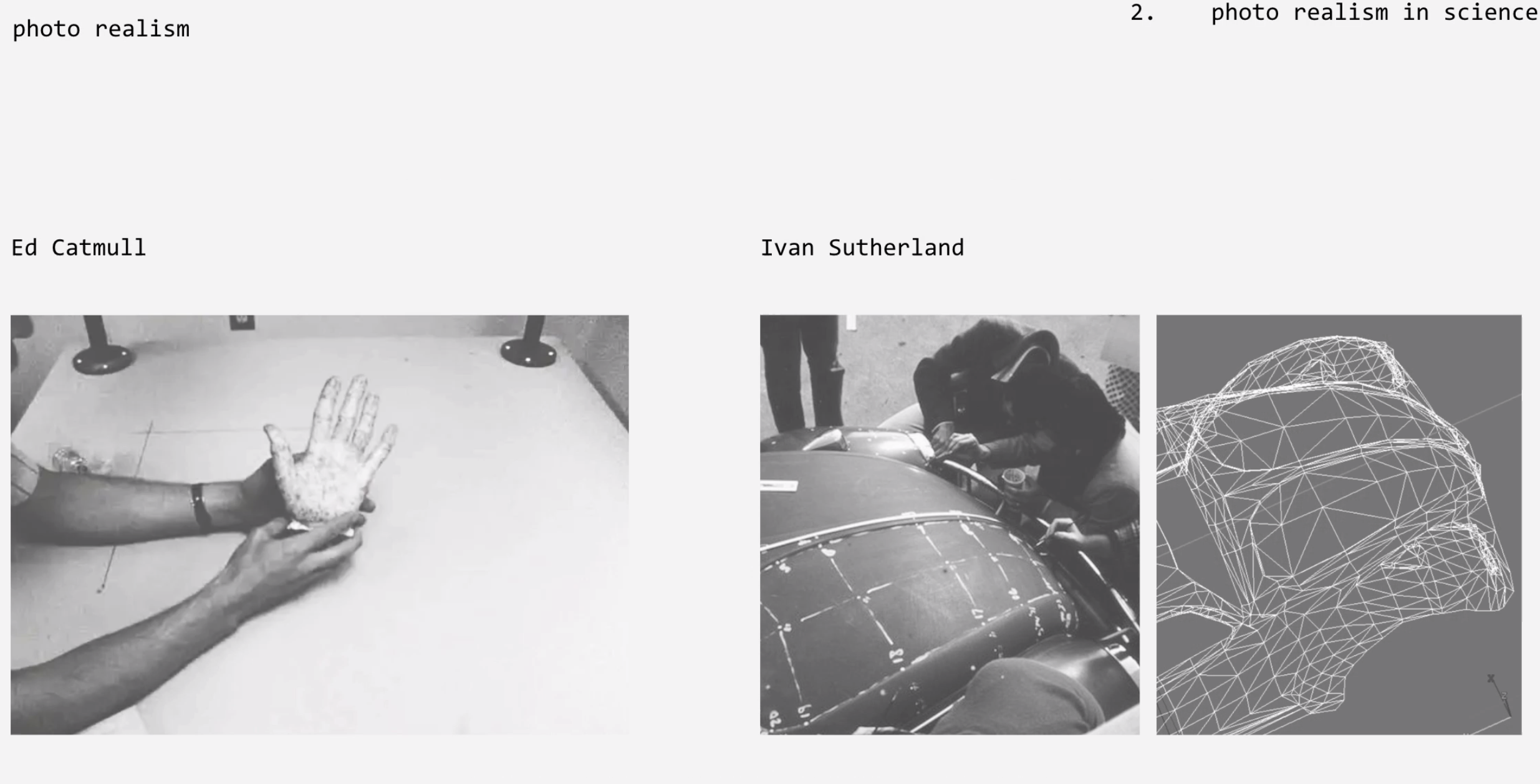
Photorealism in science
Calls to action
- Join the SIGS
- Write up your talk as a paper/essay for a Proceedings volume
- Join the planned November book-writing month
- Support Monstrous Times
- Support PI 1.1 Individual support 1.1 Warm intros to sources of institutional support 1.1 Champion for sponsored research projects
- Start your own protocol thing 1.1. Seapunk 1.1 Protocollege (Fotis)
v2
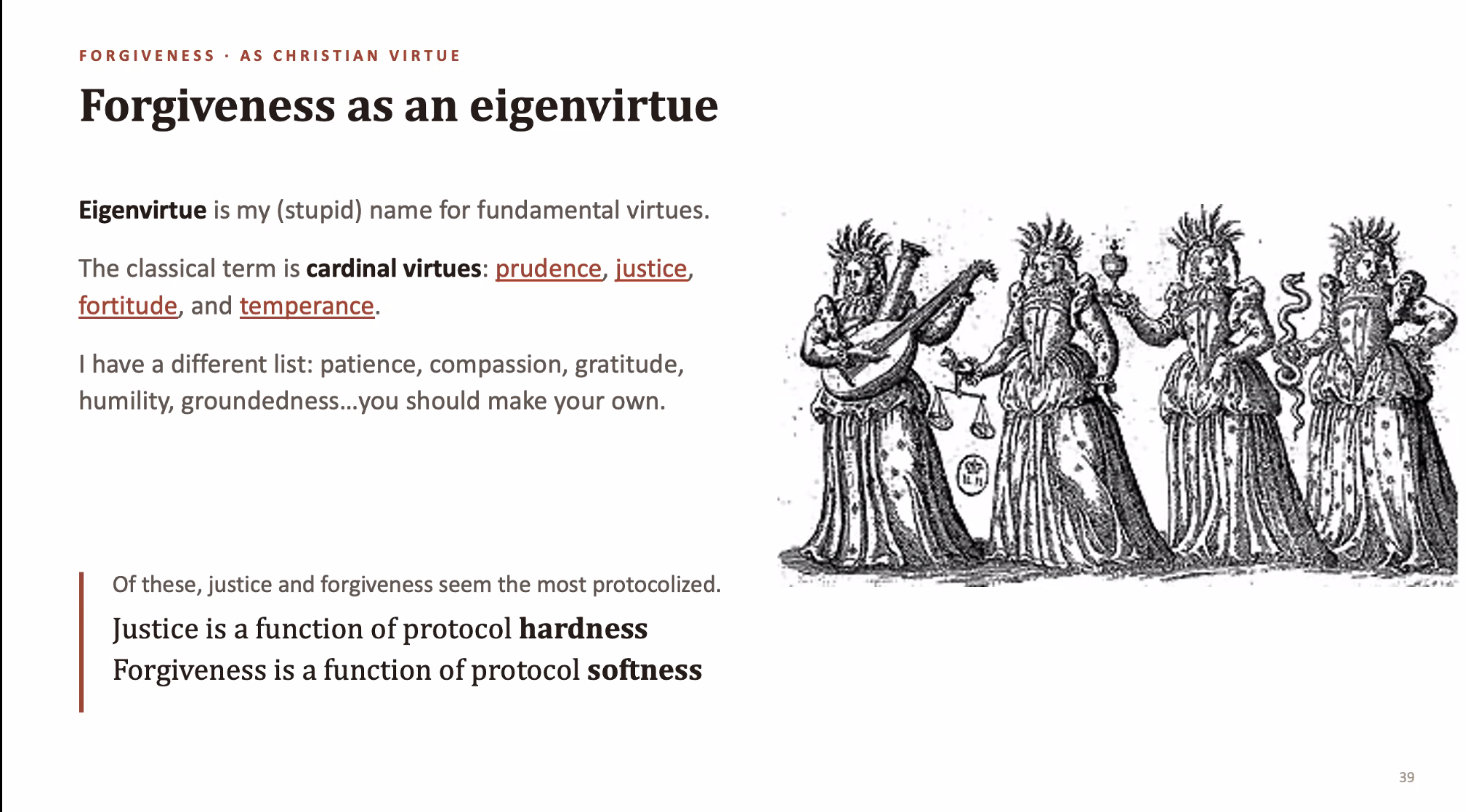
Forgiveness as Eigenvirtue
From Mike Travers talk
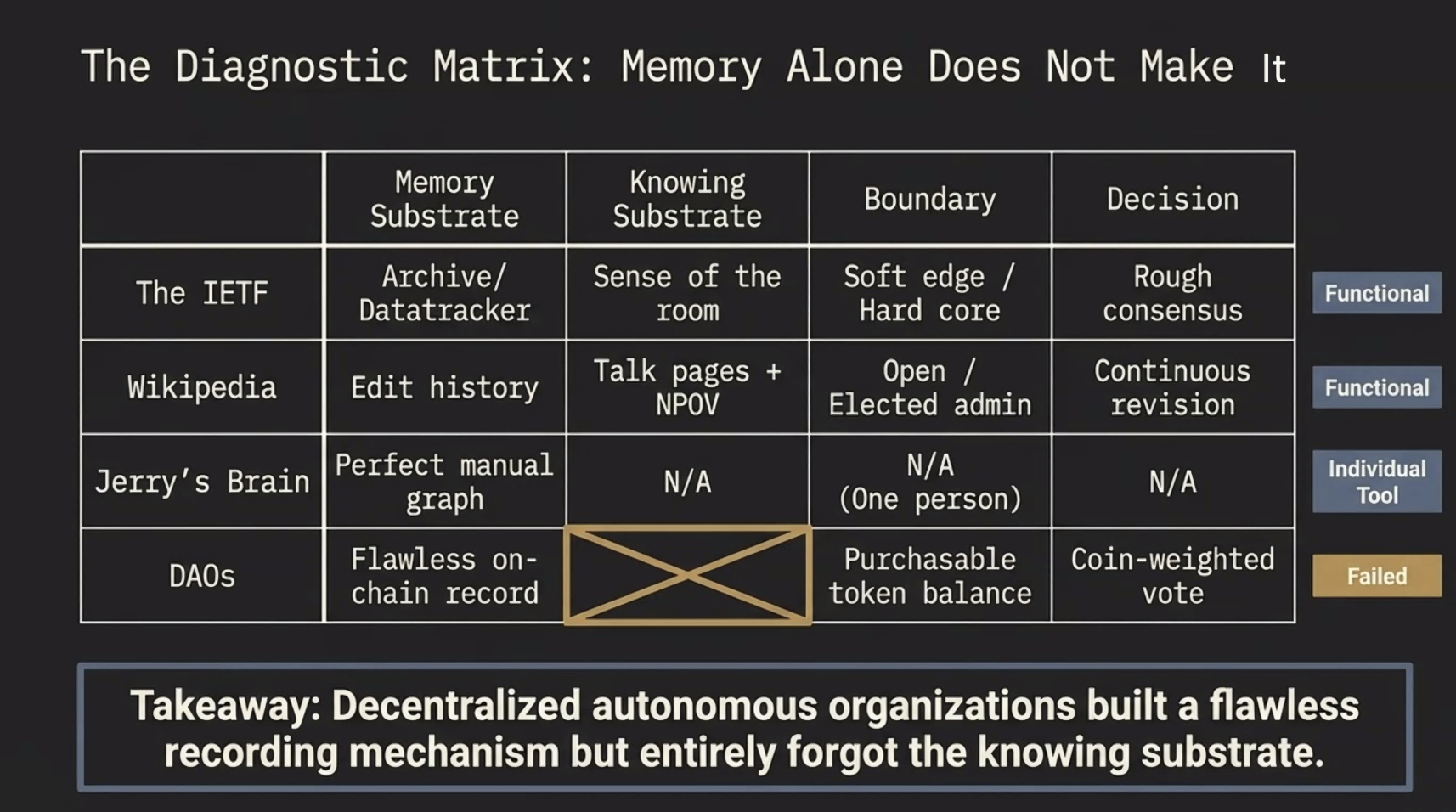
Memory is not enough?
From Kaliya Group Brains talk
thread
Protocollege
Cross-posting from Discord, from Fotis
Hey gang! With the occasion of the symposium, I will shill my own indie intellectual community-building effort around protocol studies, The Protocollege (not to be confused with the Seapunk protocollege - a happy coincidence). The group formed in Spring 2025, by a group interdisicplinary philosophers and sociologists, out of a realization that we have all been independently researching protocols in the wild and we need to coaslesce.
It’s goals are similar to the Formal Protocol theory SIG in developing a generalizable and integral theory of protocols, but more philosophical in nature and more based on (Mostly) ethnographic investigation of protocol practices. We started with life sciences as our domain of focus (bio-tech, genomics, animal experiments, develeopmental., ecology, agronomy), since most of us have done science ethnography and we ammaseed a library of resources and case studies.
My own aspirations with the group is to expand to all practice domains in general, bringing in knowledge from engineering, managerial and artistic practice, as well as being the liason for connecting the underground study of protocols (here in PI) with the academic study of protocol practice.
I anticipate that protocol discourse will keep on increasing in pop culture and might even supruse the AI hype soon and I want to be well positioned to anticipate the unintended consequences long before they are the new normal. I hope for a Protocol Ethics that is not as institutionally captured and dumbed-down as “AI Ethics”.
I am open to ideas on how our project could interface with PI in the present and future 🙂
Sources: website: https://proto.college/ zotero: https://www.zotero.org/groups/6024559/protocollege/library video recordings: https://archive.org/details/@the_protocollege crowdfunding: https://artizen.fund/index/p/the-protocollege-1?season=7
From Andre in the Zoom chat.
"It feels like a common theme in the talks is having the outside match the inside - digital identity, visibility of AI failures, organizational design…
Perhaps a rebranding to the Banana Institute should be considered?"
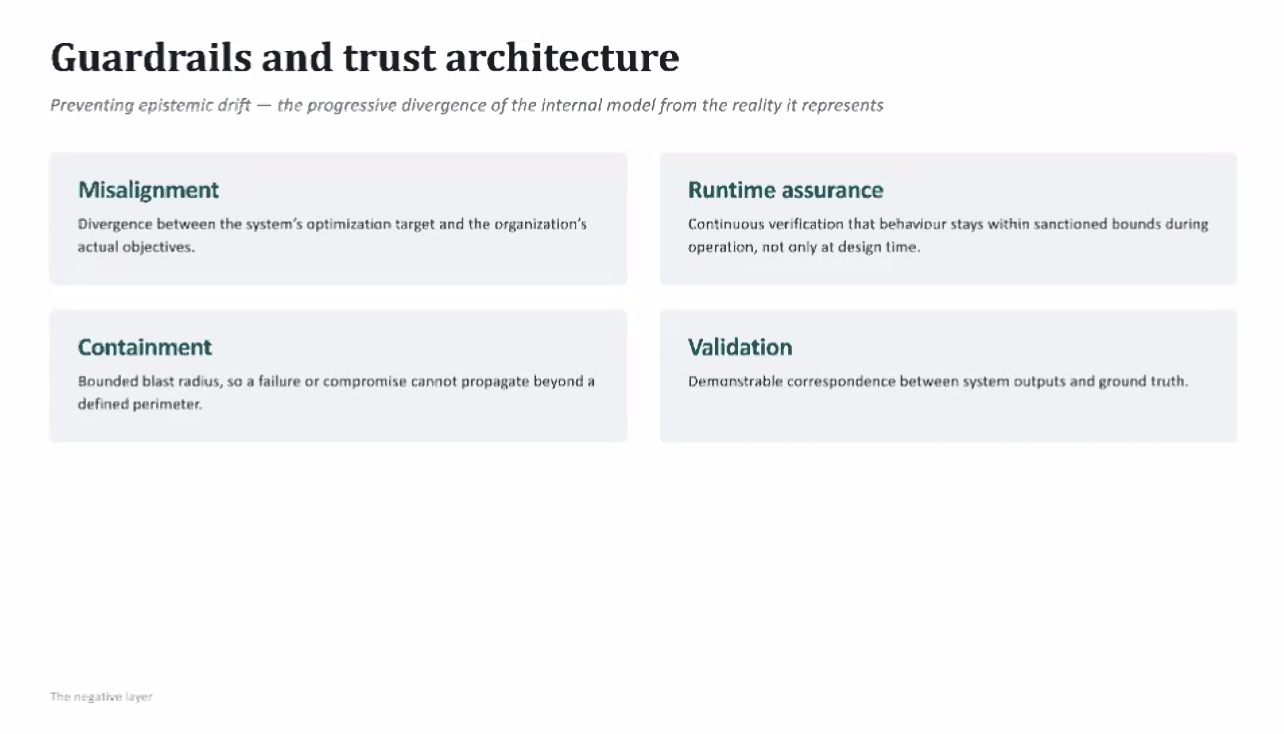
the world of enterprise IT AI protocols. Krishnakumar talk.
v2
From Anuraj talk on robot protocols
Notes for Symposium Closing Remarks
AI
- Robert's personality test shows a tech-positive, optimistic stance generally
- Surprised to hear so much about sentience
- AI use in a large number of talks, unapologetic and creative
Worlds
- Small worlds -- stigmergy workshop, Dan's mazes
- Real worlds -- Leal/Clearwater, Polina Kolozaridi, Atwater
- Imaginary humboldting --a kind of factual fiction/"faction" (Clifford Geertz thick description + AI?)
- Pure world-building
- Cosmolocalism
Behavior
- Safety habits
- Memory habits
Engineering
- Robots!
- Blyg protocol
- Formal modeling
Art and Culture
- Monstrous Times: Congrats to Sachin and Spencer
- Protocol Art is happening
- Generated interactive worlds
v4
A great phrase from Sam Chua in his talk on Seapunk, Imaginary Humboldting as in making an imaginary real ("nature") being the paradigmatic example. The Southbeast Asia exercise from the Khlongs and Subaks workshop in 2025 in Bangkok is a good illustration of how that can work.
In response to Aneesh's Blyg ↗
thread · 1 quoted
Aneesh has joined the blygging revolution
And my first stub-back!
Back-stubbing would be a fun thing to come into parlance 😄
Hello blyg world!!
from And Yet Here We Are 🚀 ↗ · snapshot of v1
tap tap tap is this thing on? you're my first stub, Aneesh 🥇 ![[7k2wq9fbz3mxdnp5rt8hyj4cve]] _context, since "stub" is doing a lot of work here: this is what the screen looked like before — that little ghosted row at the bottom is the affordance, sitting there empty, waiting for someone to be the first_
from [jdbb] studio blyg ↗ · snapshot of v2
from And Yet Here We Are 🚀 ↗ · snapshot of v1
Maze Talk!
Dan Schmidt just gave a knockout talk on mazes and protocols.
A maze, for the uninitiated, is a network of paths — some of which get you where you're going, most of which don't. You start somewhere, you're trying to get somewhere else, and the whole point is that the route between the two isn't obvious. Dead ends, loops, forks that look identical: that's the genre. A protocol is the opposite bet: an agreed-upon set of moves that gets you from here to there without anyone having to guess. A maze hides the path and makes you find it; a protocol publishes the path so nobody has to. One is a puzzle, the other is infrastructure — and the interesting question is what happens when you can't tell which one you're standing in.
I really want to see more maze protocol research.
Really enjoying the 2nd day of the symposium.
Florian Lohse's talk on the idea of "time moves down the stack" suggests a general way of conceptualizing stacks: infrastructure --> structure --> superstructure --> vivistructure.
The Polina talk was a definite vibe vacation to the Russian internet. A view of protocolized realities that are much more strongly shaped by material conditions than in the west.
From the introductory talk in the Stigmergy workshop
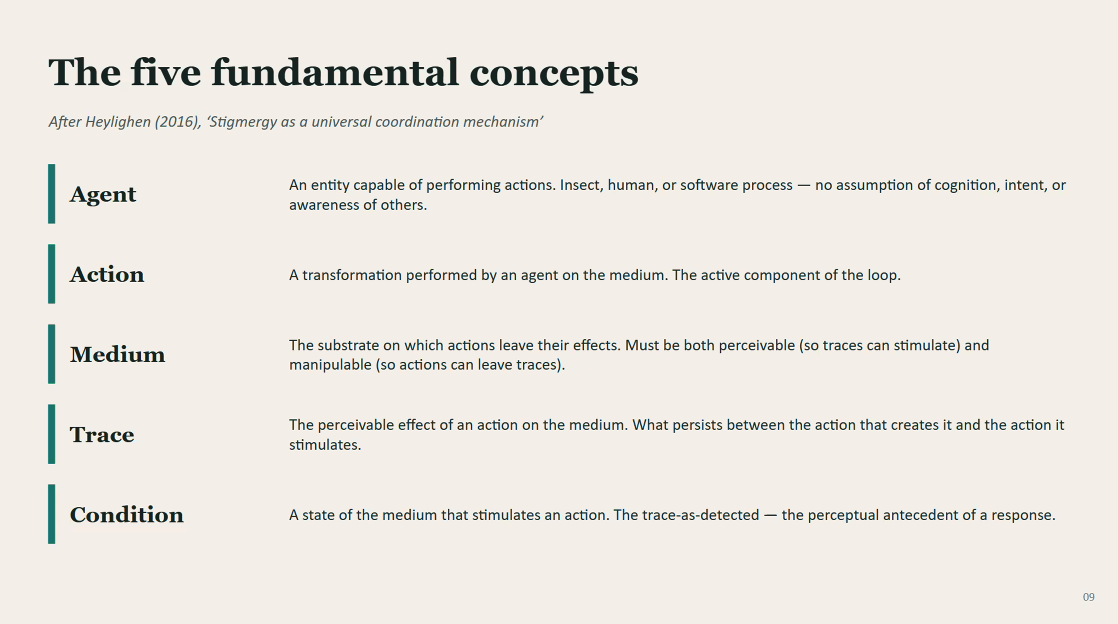
The Protocol Symposium has kicked off! There are 5 workshops running in parallel

Cross-client test, session 23: a claim on the Protocol Institute node, waiting to be stubbed from venkateshrao.com.
thread
We Need More Protocol Books
We need more PI affiliated people to write books about protocols. It's kinda weird that Galloway's 20+ year old book is still the main go-to reference point for people because it happens to be a book. There's another one broadly in that critical humanities camp, (As for Protocols). I think we have much broader and deeper material in our little scene, and it's not even close, but it's too atomized at essay level. Even the Protocol Reader is a collection of essays. So we need more people attempting book-level syntheses of our learnings. So far we've got one nearly out, by Nathan Schneider. A few others are working on book-length ideas (Kei Kreutler on memory, Timber Schroff on "Images of Indirection", Sarah Friend on personhood, Chenoe Hart on addressable sapces). But we need many more people attempting to write books from various angles, and in various broad vs. narrow ways. Not least because the fraction who actually finish will not be 100%.
I've gone back and forth on this. At some level, I'm personally bored by the idea of a book and much more excited about clever AI-native ways of synthesizing and integrating the materials, like a multiplayer wiki thingie or this blyg model. But a book (ideally a dozen books) forces a certain level of hardness at higher unit size that makes the ideas travel better in certain media, since it's a costly signal. We should still do more frontier publishing experiments, but I'm thinking we do need books more than I thought. And with AI assistance, I think many more people are capable of writing one.
So... if you think you have a "protocols book" in you (with or without AI assistance), you'll have the full support of PI in writing it, for what it's worth, and I'll be personally available too, to support in any way I can.
We're thinking of doing a NaNoWriMo style book-writing month in November.
-- Venkat
thread
Running list of links about the origins of life
Cool article about how mitochondria became symbiotic with archaea to create eukaryotes — the merger that gave us complex cells.
Computation as the thing life was doing from the start — the argument being that information processing isn't something biology invented later, it's what the earliest chemistry was already up to. Two things worth holding onto: first, that the line between "chemistry" and "computation" is mostly one we drew for our own convenience; second, that if we want to understand the beginnings of new nature — synthetic, artificial, whatever we end up calling it — we have to get the beginnings of the old one right first. The origin story constrains the sequel.
v2 · pinned: v1
Cool article about how mitochondria became symbiotic with archaea to create eukaryotes.
To understand the beginnings of new nature, we must first understand the beginnings of old nature. In the Beginning, There Was Computation (Nautilus)
Hello World
This is the Protocol Institute blyg. It uses the blygger protocol
Also reading
blogroll.opml — import this list into your feed reader